Showing posts with label Bible. Show all posts

Sunday, September 29, 2013

The Bible and Doctor Who- How Not to Scare your Friends Away from Awesome Things


How do we get someone we know to enjoy something that is not immediately enjoyable? I recently tried to get one of my best friends to watch Dr. Who. He pulled up Netflix and started on Season One, episode one, “Rose.”

Those of you who have watched the entire series are now probably feeling exactly what I felt—excitement that my friend was trying, but apprehension that he decided to try from the beginning. Most fans will agree that the pilot is not the strongest episode. In fact, after seeing the terrible CG plastic men and hearing Mickey complain just one time too many, most of us were surprised that this is what we have to thank for rebooting the entire Dr. Who franchise.

In short, for those who know nothing of the show except how much their friends go on and on about it, this is a terribly frustrating time for new would-be Whovians. It’s a great buildup for a great fall—like going to see Napoleon Dynamite after hearing everyone quote the lines for a month.  They begin to suspect that it was just too good to be true.

Now let me actually talk about the Bible for a bit.

Let’s say you have a friend that has never really done anything with religion. (He’ll probably say it like that too—religion. Not faith, or Christianity, or even Jesus. Just all of religion). His face goes blank when the conversation brings up topics like prayer, church, the Bible, or worship. And you want to introduce him. You tell him how great it is, that a life with Christianity is better than a life without. And you loan him your Bible.


You start him in the New Testament (the Old is just complicated and we wouldn't want him getting the wrong ideas about selling off family members into slavery or bending fish hooks into spears), and probably the book of Luke (since it’s the one they made a movie about). And you sit back and watch him read, eager to see his life change.


And after a few chapters, he looks up sheepishly to say, “This is kinda dumb.”

How?! How could the greatest story on earth be condensed down to “dumb?” The hardest thing to understand at this point is that not everyone sees this story the same way you do. If you’re like me, this may be the first story you were ever told. It’s been told to you in so many different ways, in so many different books, films, and songs, that you take it for granted. But to your friend, the story is new, and the story is weird.

First of all, it doesn’t even begin with Jesus. It starts on this supporting character John the Baptist, whoever he is, and there are angels appearing in dreams. This is all well and good until Mary starts singing. (Am I even supposed to read that? I guess I’ll just skip it.) But now this guy Zechariah is spouting off this prophecy and it’s all too much. I’m on Chapter 2 and the only thing I’ve heard about this Jesus guy is that he hasn’t even been born yet. Can I flip forward a couple of chapters and start again?

Let’s say he goes on to Chapter 2—Now there’s a pregnant woman forced to come home for some reason and the whole birth Jesus only takes about six sentences so I have no idea how the whole Christmas season is supposed to be based on that. And there are angels again, but they’re just shouting at some shepherds on a field. I can’t. I just can’t.

OK. If you look at it that way, it might be kind of weird. But just stick with it. It gets better.

And it does.

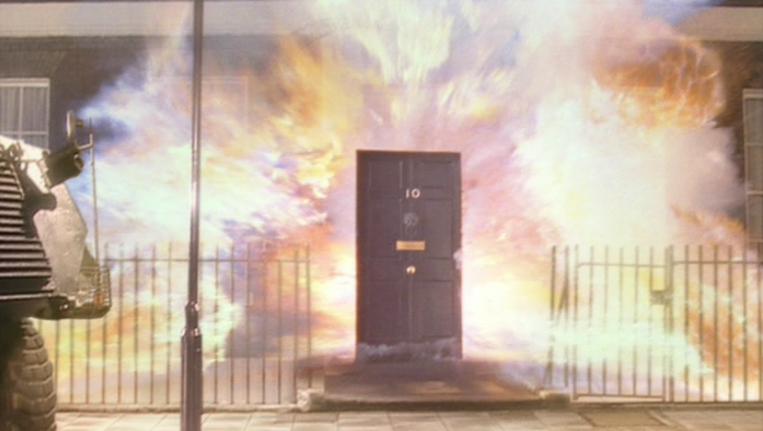
Because the first season of Dr. Who isn’t just plastic men and whiny boyfriends. We meet Captain Jack Harkness, see the end of the world, hang out with Charles Dickens, and fire a missile into 10 Downing Street.

By the time the new watcher reaches “The Empty Child” (episode 9), they’re hooked. They realize:  “Wow…this is dark. And I’ve come to like these people. And him. I really don’t want him to die.”
And then he does. He survives through so much and then he finally can’t take it anymore. They’re at the end of the season and Christopher Eccleston sacrifices himself. Rose Tyler looks on in horror because there is nothing she can do.

And he dies.   

Boom. Resurrection. For some, death is only a new beginning.

Now, I’m not trying to say that Dr. Who is a Jesus allegory (any hero can be a Jesus allegory if you try hard enough).* But he is a powerfully awesome alien who has the power to resurrect if given the proper circumstances, thus the introduction of David Tennant. Our Doctor is now back: newer, shinier, and with better hair.

It is at this point that most viewers have no trouble whatsoever continuing with the series. Yes, there is some initial pull-back towards Eccleston’s goofy facial expressions and baseball-mit ears, but we’ve grown so comfortable with the supporting cast of Rose, her mom, Captain Jack, and Mickey that we’re willing to give these following chapters a chance.

So we see what the disciples have to say. We take the story of Jesus’ life, death, and resurrection and use it to learn more about ourselves and our place on earth. Acts through Revelation is now less about that beginning story and more about learning what to do with the story we’ve been told.

And it’s awesome. The deeper you go, the more you understand. You get to love David Tennant and Matt Smith and every little supporting character they adventure with. Then you get to the end and think, “Well that was great. What now? Where shall my Dr. Who adventure take me?”


This depends on what kind of person you are. Many will go back and do the whole thing again. Most will probably begin again from their favorite point, maybe repeating it over and over until they can quote it by heart. Some, however, will be so inspired that they decide to see where all of this came from. Those few will return to the original begun many years, to see the forty years of stories and history leading to what we know today.

The Old Testament is not easy. It takes time, energy, and a pile of reference books to understand, mainly because it was written by and for a culture so far separated from our own. The issues of those cultures, the questions and struggles, are very different than those we see today.

The 1960-‘s-80’s were a very interesting time. From the point of view of a television show, the original Dr. Who series toyed with the technology available, seeing just what they could convince the audience to believe, with very little explanation. 

                                                       Yeah. No explanation.

The reboot of the show in the 2000’s had to follow different rules because it had a very different audience. People today aren’t going to wait around to find out why this strange guy has super powers. We aren’t going to wait to find out why/when they are where they are, who the supporting characters are, or why this strange man wants to do this in the first place.

So that’s my argument—if you want to tell someone about the bible or about Dr. Who (they may not have equal importance, but they are both absolutely important), make sure you do it the right way. These are complicated issues based on years of history and culture that the uninitiated will not understand without help.

Let’s not toss our friends into “the Vashta Narada eat your face”or “bald Elisha sics bears on kids.” There are better stories to begin with.


*Naysayer author says: “He IS doomed by a kiss though. That’s pretty cool.” 


Sunday, November 25, 2012

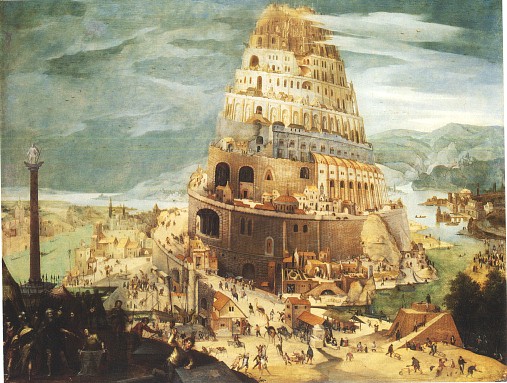
Building Our Own Towers


So here’s my heretical statement of the day: we need to think less about heaven.

Toni Morrison won the Nobel Prize in Literature in 1993. At the Nobel Prize Award Ceremony, Morrison told the story of a blind, but wise old woman, who teaches a group of children that using stories to understand other people is the greatest ambition of language. I highly suggest reading the entire speech, for it is magnificent: http://www.nobelprize.org/nobel_prizes/literature/laureates/1993/morrison-lecture.html

Despite its beauty, most of this speech will not apply to this post. One section, however, considers the story of the Tower of Babel, from Genesis 11:1-9

1 Now the whole earth had one language and the same words. 2 And as people migrated from the east, they found a plain in the land of Shinar and settled there. 3 And they said to one another, Come, let us make bricks, and burn them thoroughly. And they had brick for stone, and bitumen for mortar. 4 Then they said, Come, let us build ourselves a city and a tower with its top in the heavens, and let us make a name for ourselves, lest we be dispersed over the face of the whole earth. 5 And the Lord came down to see the city and the tower, which the children of man had built. 6 And the Lord said, Behold, they are one people, and they have all one language, and this is only the beginning of what they will do. And nothing that they propose to do will now be impossible for them. 7 Come, let us go down and there confuse their language, so that they may not understand one another's speech. 8 So the Lord dispersed them from there over the face of all the earth, and they left off building the city. 9 Therefore its name was called Babel, because there the Lord confused the language of all the earth. And from there the Lord dispersed them over the face of all the earth (ESV).


This has been a standard of biblical teaching in my life for as long as I can remember. It’s a really easy story for kids to understand: the people tried to build a tower to heaven, and God didn’t like it. Why? It’s often seen as an arrogant defiance against God, humanity seeing itself as worthy of living beside Him regardless of His wishes.

Another way that I’ve liked to look at it is that the people wish to “make a name for ourselves, lest we be dispersed over the face of the whole earth.” This is their way of rejecting God’s plan for them to spread and grow. This was their attempt to stand still and be gods in their own eyes.

Either way, God confused the builder’s languages so they couldn’t communicate. And it’s just about impossible to build anything unless you can communicate. This was their punishment for trying to reach heaven before their time, for trying too hard to live higher than man was meant to live.

And I thought this way for twenty-three years, until I found Toni Morrison’s speech in a textbook I was teaching from. She threw a new light on the traditional interpretation, through this section, a part of the blind old woman’s speech to the children:

“The conventional wisdom of the Tower of Babel story is that the collapse was a misfortune. That it was the distraction, or the weight of many languages that precipitated the tower's failed architecture. That one monolithic language would have expedited the building and heaven would have been reached. Whose heaven, she wonders? And what kind? Perhaps the achievement of Paradise was premature, a little hasty if no one could take the time to understand other languages, other views, other narratives period. Had they, the heaven they imagined might have been found at their feet. Complicated, demanding, yes, but a view of heaven as life; not heaven as post-life.”

Beautiful.

The story is really complicated by verse six, the reason God gives for why their languages should be muddled: “Behold, they are one people, and they have all one language, and this is only the beginning of what they will do. And nothing that they propose to do will now be impossible for them.”

This section troubles me, while at the same time filling me with optimism. It first makes me wonder why God would want to stifle humanity’s growth so substantially. Were humans so immature that God had to set them back thousands of years? Then this verse makes me wonder about our world today—a world I see on the cusp of rejuvenating that one language. The spread of global language through the internet, what our society can accomplish when we are able to achieve one language, boggles my mind.

But Morrison made me think that the confusion of the languages wasn’t God punishing mankind. Confusing our languages was His way of making us grow, of teaching us to love each other. It was a parent making His children go to school, to learn, to turn into human beings rather than letting them experience joy when they were young.

If God is love, then this was His way of teaching us to love each other.

It reminds me of Jesus’ words in Luke, when the Pharisees began harassing him about heaven and God’s plan:

Luke 17:20-21—"20 Being asked by the Pharisees when the kingdom of God would come, he answered them, The kingdom of God is not coming with signs to be observed, 21 nor will they say, "Look, here it is!" or "There!" for behold, the kingdom of God is in the midst of you (ESL)."

Of course, at the time Jesus was in the midst of them (while they did their best to ignore what He was really trying to say). But His message was clear—concentrate more on the people around you, on the Kingdom of God around you, than on the heaven that is to come.

Every time we concentrate on achieving a personal heaven rather than helping and loving our fellow man, we are building another tower.

Is this heresy?


Saturday, March 3, 2012

A Timeless Heaven

This time around I have more of a thought than a question. I don’t expect many to disagree with me about this, but it could provide the opportunity for some interesting discussion. This idea works off of the same principles of time that I developed in my last post (God Pressed Play).

Here’s the premise: God lives outside of our timeline, which is how He is able to have a plan and allow freewill at the same time. What we experience day-to-day is not what God sees, because He is not limited by a linear existence.

So: the realms of Heaven and Hell also exist outside of Earth’s timeline. Although I have little knowledge of the natures of angels and demons, I would imagine that as they inhabit these realms, they also live outside of our timeline (though maybe not to the same degree that God does).

Therefore: The nature of our existence once we leave the Earth will change to match the realms we are joining, either Heaven or Hell.

We can only gather so much about Heaven from the Bible and, of course, we’re not going to be able to understand most things right now, even though it’s commendable for us to try. As Paul says in 1 Corinthians 2:9-10:
“But, as it is written,
‘What no eye has seen, nor ear heard,
nor the heart of man imagined,
what God has prepared for those who love him’—
these things God has revealed to us through the Spirit. For the Spirit searches everything, even the depths of God.”

So, let’s do a little more searching into “the depths.”

I know that there is to be no marriage in heaven (“For in the resurrection they neither marry nor are given in marriage, but are like angels in heaven”- Matthew 22:30). This suggests that the relationships we built on earth will be quite different once we reach Heaven. There are several verses that consider the states that our bodies will take, that they will move from a natural form to a spiritual one:

1 Corinthians 15:43-44

“It is sown in dishonor; it is raised in glory. It is sown in weakness; it is raised in power. It is sown a natural body; it is raised a spiritual body. If there is a natural body, there is also a spiritual body.”

But a great part of our Christian tradition, one of the points that I’ve been taught for as long as I can remember, is that once we get to Heaven, we’ll see all of the loved ones that died before us. It’s a great picture—joyfully reuniting with family and friends that we haven’t seen in years. That tradition is built off of such verses as 1 Thessalonians 4:13-14:

“But we do not want you to be uninformed, brothers, about those who are asleep, that you may not grieve as others do who have no hope. For since we believe that Jesus died and rose again, even so, through Jesus, God will bring with him those who have fallen asleep.”

Obviously, Christians have been worried about who they’ll see in Heaven for quite a while.

But, let’s go back to the issue of time.

I suggest that when we go to Heaven, we will not only reunite with all of the loved ones who came before us, but will also meet all of those who died after us. Here’s a wonderfully illustrated table to help explain:


So, we are all on Earth, which is in linear time—we move forwards, whether we want to or not. The little black dots on the Earth timeline represent deaths. The red lines then correspond to their winding up in Heaven or Hell. If you’ll notice, no matter when on the Earth timeline someone dies, they end up in the same place in heaven—a nonlinear eternity.

If I were to add dates to the Earth timeline, it would show that someone who died in 1411 arrives in Heaven at the exact same time as someone who dies in 2012.

The coolest part of this theory? When I die, I’ll be able to see my grandparents and great-grandparents, and Moses, King David, Emperor Constantine, Abraham Lincoln, and Pope John Paul II. But, I’ll also be able to meet my great-grandchildren, and my great-great-grandchildren, and my great-great-great-grandchildren, and all of the other “greats” all the way up until Jesus decides to come back into the linear timeline and end Earth’s existence.

There’s a couple of other ways I could go with this. There could be an issue with Luke 23:43, where Jesus tells the criminal on the cross next to him: “Truly, I say to you, today you will be with me in Paradise.”

Today.

But what does “today” mean when an eternal being is trying to explain Heaven to a linear one?

Now it’s a language issue. But I like the idea that I’ll be able to see all of my ancestors and descendants, all at once, when I get to Heaven.

I hope that isn’t heresy, cause it’s pretty cool.

Saturday, February 11, 2012

God Pressed Play

Alright, let’s take this post out of the strictly Biblical and delve into a more Theological concept: the problem of free will and God’s plan.

I find that the problem always comes back to the concept of Time. But I’ll get to that.

Here is what we know:
• God is omnipotent- He can do anything, change anything, destroy anything,
breathe life into anything. He is limitless.
• God is omnipresent- He is everywhere, in space and time. There is no
geographic location in heaven or earth devoid of him (Hell, I suppose, is the
exception, by His design). Likewise, there is no time, past, present, or
future when God is absent.
• God is omniscient- He knows all. Nothing is hidden from God, neither in the
mind nor on the earth.

Because we know these, we know something else: we can never truly understand Him. It is one of the great ironies of our faith, that we are compelled to understand the nature of God, without the ability to ever fully comprehend Him.

From the English Standard Version:

Jeremiah 29:11 “For I know the plans I have for you, declares the LORD, plans for welfare and not for evil, to give you a future and a hope.”

Philippians 2:13 “for it is God who works in you, both to will and to work for his good pleasure.”

John 16:13 “When the Spirit of truth comes, he will guide you into all the truth, for he will not speak on his own authority, but whatever he hears he will speak, and he will declare to you the things that are to come.”

These verses speak of God’s Plan, a concept that I’ve been taught in Sunday School since I was old enough to understand language. They said, “God has a plan for you and He knows what will happen long before you do. He knew what would happen before you were even born.” It’s a rather comforting thought for most Christians—God has the entire realm of existence planned from beginning to end. Every thought, word, and deed is set in stone. We can do nothing but try to understand what that plan is.


The Ancient of Days, by William Blake, showing God as the architect of the earth.

So here’s the problem. How does prayer work?

Luke 11:9-10 “And I tell you, ask, and it will be given to you; seek, and you will find; knock, and it will be opened to you. For everyone who asks receives, and the one who seeks finds, and to the one who knocks it will be opened.”

Another inspiration verse, and another fact that I’ve been taught since childhood. God listens to our prayers and needs, and responds to them (with “yes,” “no,” or “wait”). So what this verse is telling me is that if things aren’t going the way I like, then all I have to do is ask and, if He finds it wise, God will change his plan?

That seems wrong.

Then there’s the classic question of free will- do I make my own decisions? Because God knows everything, does he direct everything? Then, has he destined that there are those who will never follow Him, that will die without ever knowing His salvation?

That seems wrong too.


That was just the introduction. Here’s where things get weird and my own potentially heretical theories pop up.

The problem, as I said earlier, is time. If today I have a problem, then I pray and God hears me and he answers my prayer. This is the way we think, linearly. The problem is, God is not linear. He exists outside of our time, the very concept that he is here with us NOW, is ridiculous. God cannot be limited to here and now, or there and then. That speaks against his omnipresence. This is why we say that He knows what you want before you ever ask for it. You just have to ask.

But think of God as outside of our own time led me to an interesting line of thought, one that ended in the theory that I used to title this post: God Pressed Play.

I'll use Windows Movie Maker as my object lesson.


I used to use this program all the time in college, to make slideshows for clubs and presentations. The multiple bars along the bottom allow me to insert music, pictures, videos, and transitions. Then I can edit them, flip them around, crop them, cut them, delete them. I watch what I have, then change what I don’t like. When I’m happy with the finished product, I publish it to movie form and the file type changes from a Windows Movie Maker Project file (.MSWMM) to a standard video file (.WMV).

I propose that this is what God did. He saw the potential and created a project. He made the earth, then changed the waters, then added life. He watched it and saw what the forms of life were doing, so He backed up and changed things. He added more layers, more complexities, then watched it again. The timeline is linear, but God is not on that linear line. He sat above it, at his computer screen, moving the timeline back and forth, and deciding where it would go. He saw a conflicting part, a discordant note, and allowed it to play out because He knew how much more beautiful that resolution would be for the overall project. The process repeated, over and over again. Eventually, he reached November, 2011, when I prayed for help as I presented a paper at a conference. Perhaps God changed the project, or perhaps He decided to leave it the same.

And this continued until He decided that the project was finished. He watched it again, to be sure, then he clicked publish and saved the file as something else. He brought up the movie in a separate program, got a bag of popcorn, and pressed play.


Some of you may worry that this theory reaches too closely toward Deism: the view that God has set the universe in motion, but does not interfere with how it runs. But that is not the case at all. He listened to humanity while he was creating it; He changed the course of events while he was deciding what the course of events would be. In that way, our prayers don’t change His plan; God listened to our prayers before his plan was complete. What we live in now is the .WMV file, the version that he perfected and sat down to watch, after answering all of the prayers and addressing all of the problems.

As far as I can tell, this theory solves the problems: God is still omnipotent, omnipresent, and omniscient. He still has a plan for existence. He still listens to our prayers and decides our fates, and we have the free will to decide our own destinies.

So, this is my theory. God Pressed Play. Tell me, friends: Is this heresy?